
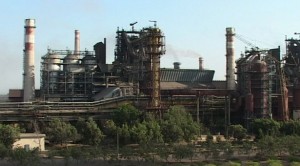
KARACHI: Once the maker of a large portion of the nation’s steel needs, state-claimed Pakistan Steel Mills’ (PSM) enormous industrial facility structures on the edges of the city stand frightfully still.
A 4.5-km-long transport line that once conveyed coal from the close-by port is sit without moving and impact heaters rest quiet. Winged creatures manufacture homes in Soviet-period gear and stray canines snooze outside relinquished plants.
The organization is available to be purchased, however the administration can’t discover a purchaser as it battles to get privatizations back on track after a progression of difficulties. A look at PSM’s funds might clarify why.
The organization has $3.5 billion owing debtors and collected misfortunes, loses $5 million a week and has not delivered steel at its 19,000-section of land office since June a year ago. That was the point at which the national gas organization cut force supplies, requesting installment of bills of over $340 million.
In the same way as other Pakistani modern firms, political interfering and rivalry from less expensive Chinese imports left PSM helpless.
They additionally undermine Prime Minister Nawaz Sharif’s guarantee to the International Monetary Fund to privatize PSM by March, consequently for a $6.7 billion national bailout advance concurred in 2013.
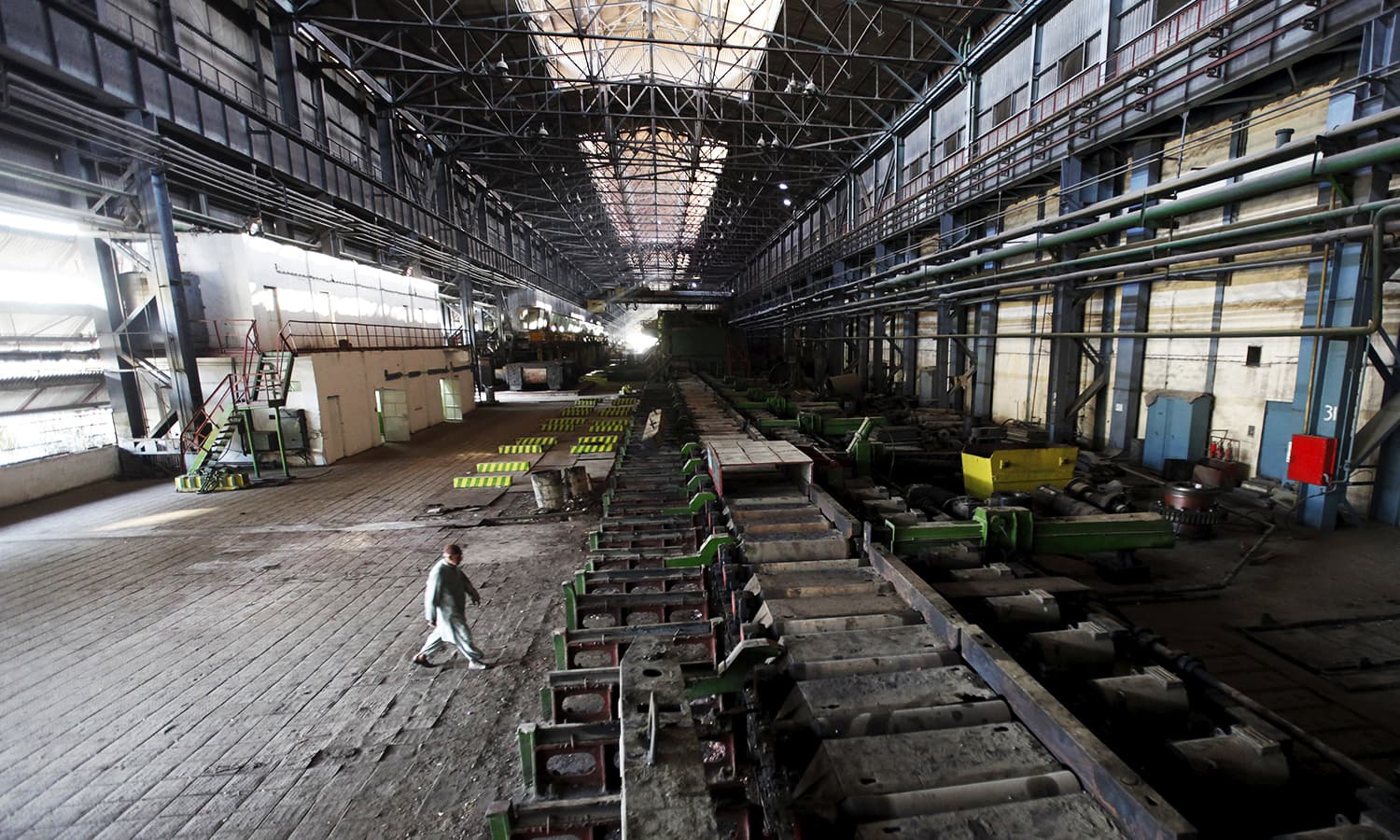
A man strolls past machines at the hot strip factory branch of the Pakistan Steel Mills (PSM) on the edges of Karachi Feb 8, 2016.
More than 14,000 occupations are at danger, while the Pakistani economy needs mechanical development to give business to a developing populace.
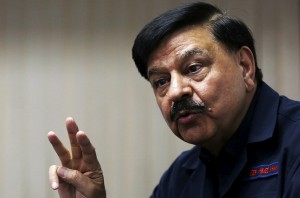
“Nine billion rupees ($86 million) are promptly expected to see the organization through to June,” organization CEO Zaheer Ahmed Khan told Reuters at its sprawling premises.
“It’s truly tragic, it’s a national resource. We are an atomic power however what does it say that we can’t work a little steel plant?”
Privatization torments
The administration has infused $2 billion into PSM since a fizzled selloff in 2006, however can’t contribute more capital, Privatization Commission Chairman Mohammad Zubair said.
“The best alternative is to privatize so that private division purchasers infuse cash-flow to update the plant and apparatus, purchase crude material etc,” he said.
PSM is one of a few firms Pakistan needs to offer to restore misfortune making substances that cost the legislature $5 billion a year.
Be that as it may, it has attempted to rebuild draining organizations, including PSM and Pakistan International Airlines (PIA), and get them fit as a fiddle for potential purchasers.
While the misfortune making firms are a channel on Pakistan’s assets - around an eighth of the administration’s financial incomes a year ago - few apprehension Pakistan will slide into monetary emergency.
The IMF has kept on discharging portions of its 2013 bailout bundle in spite of missed targets, and Pakistan is investigating different wellsprings of bolster, similar to associate China which wants to put $46 billion in another financial passageway.
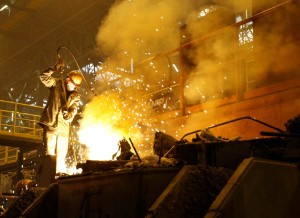
A worker slides a flight of stairs from an iron-production area at the Pakistan Steel Mills (PSM).
Back in the USSR
Outlined and supported by the Soviet Union in the 1970s, PSM was at one time the pride of the country, showcasing a quickly industrializing Pakistan with the way to deliver an essential building hinder for what’s to come.
Over the site, signs beseech laborers to trust steel will make Pakistan more grounded.
The company’s proverb is “Yes, I can”.
A widespread machine made in the USSR remains in open ground close to the transport line at coal taking care of plant at the Pakistan Steel Mills (PSM) on the edges of Karachi.
The office has the ability to grow to create 3 million tons of cool and hot-moved steel every year, against today’s 1.1 million tons, CEO Khan said. At 3 million tons, PSM would turn out to be “exceptionally gainful”.
In any case, administrators neglected to overhaul hardware, misfortunes spiraled and generation tumbled 92 for every penny in the previous decade as interest for steel tanked amid the 2008 retreat and clients swung to less expensive Chinese items.
Global purchasers indicate minimal hobby. Authorities near the administration’s privatization plan said suitors offered scarcely $100 million for PSM against a normal $900 million.
“You have the area and … base yet it doesn’t have the hardware,” said Arif Habib, an agent whose aggregate offer for the organization 10 years back yet would not touch it now.
Without any takers, the central government needs the trade strapped common government out Sindh to assume control.
A gathering of Sindh authorities went by the site this year, the CEO said. They exited with money related plausibility reports however never got back to.
Zubair, the privatization administrator, said if the Sindh government declined to assume control, he would restart the privatization process.
Unpaid, as yet working
Privatization would be combative: this month, dissents against the offer of PIA turned vicious.
PSM workers, half of whom live on the site in a private complex complete with clinic and cricket stadium, haven’t been paid for five months.
Be that as it may, pride and couple of choices mean most spend their days at the plant, repairing and visiting.
At dusk, the staying 7,000 laborers heap into transports for homes in Karachi.
Mohammad Taqi, who has worked at the plant for a long time, still turns up each day.
“I’ve spent such a variety of years here that I simply supplicate that it will begin working once more,” Taqi said, beside noiseless, towering impact heaters.
“This spot used to be alive. I simply need things to be the same once more.”